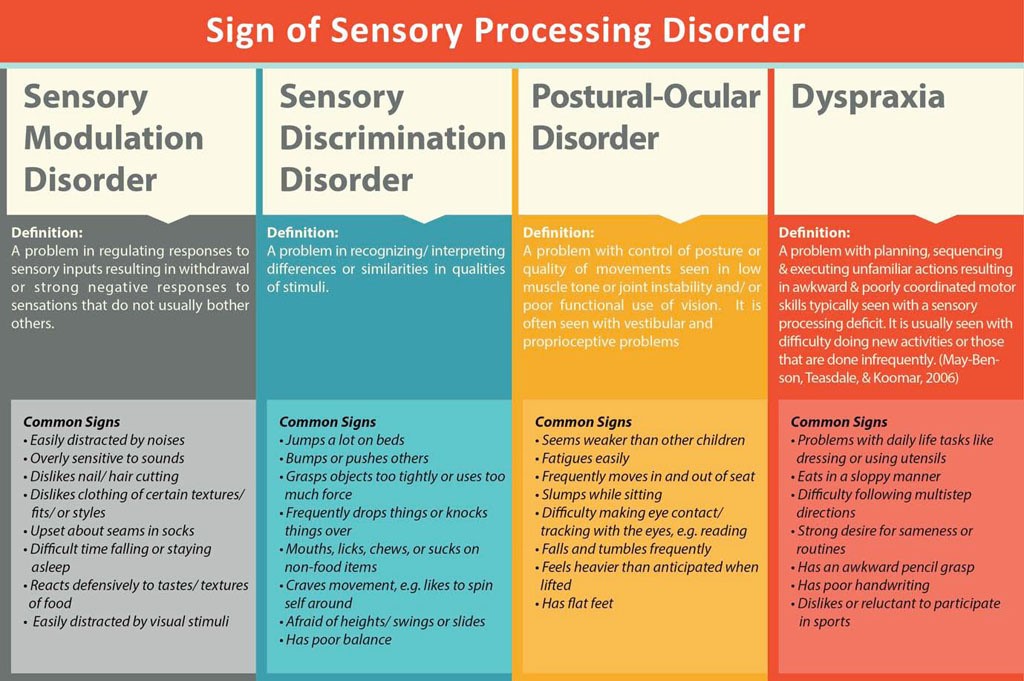
If you answer yes to any of these symptoms this may mean your child has an issue with either, Sensory Processing, Sensory Modulation, Praxis and Motor Coordination, postural control or Sensory sensitivities.
The primary occupations of babies and children are playing, learning, and interacting with their family caregivers and, eventually, their peers. Occupational therapy interventions address developmental milestones such as (but not limited to):
Occupational therapy practitioners have training in psychosocial and mental health conditions and are well suited to address children’s emotional needs as they relate to the sensory aspect of everyday activities and social interactions. For example, occupational therapy practitioners help children develop the ability to cope with sensory challenges and use sensory calming strategies to deal with frustration, defuse anger, and manage impulsivity in order to succeed at individual tasks and collaborative interactions at home, at school, and in the community.
Sensory integration involves perceiving, modulating, organizing, and interpreting sensations to optimize occupational performance and participation. This includes vestibular (movement), proprioception (joint receptors, body awareness, position in space knowledge, grading of movement, muscle tone), touch, olfactory, auditory, visual, and oral senses.
These sensations have to work as a team and integrate well in order to allow us to function normally. Well-regulated and appropriately functioning sensory systems contribute to important outcomes in social-emotional, physical and motor, communication, self-care, cognitive, and adaptive skills development and maintenance. Deficits in sensory integration can pose challenges in performing activities of daily living (ADLs), in addition to development, learning, playing, working, socializing, and exhibiting appropriate behaviours across many environments (Schaff & Smith Roley, 2006).
Sensory integration and modulation disorders often lead children to have extreme over reactions to what others consider mild stimuli, or to completely shut down, be anxious, or disengage like many children with Autism. These children are often stressed and overwhelmed.
Some children are sensory cravers- they may crave too much movement & touch like many children with ADHD.
Differences in interpretation of stimuli can impact motor skills and coordination, further limiting a child's development, especially with motor skills, much like children with developmental delays, low muscle tone and/or coordination issues (dyspraxia).
The sensory integration theory and intervention methods researched and developed by A. Jean Ayres, Ph.D., OTR/L, provide a neuroscience-based approach to addressing sensory integration concerns. Without intervention, issues in sensory integration continue into adulthood and have been reported to impact work performance, relationships, and general functional abilities (Kinnealey, Koenig, & Smith, 2011). I am here to help!
Most are familiar with the 5 basic senses, but the most powerful senses that act on our brain are actually those of vestibular (movement), proprioception (joint and muscle) & touch! The sensory sub-cortical processes need to be working well (such as sensory processing) to give the FOUNDATION for functional life skills on the higher levels.